
Install Artificial Grass: Step‑by‑Step Guide for Mississauga Homeowners
Thinking about transforming your yard with artificial grass? Whether you’re tired of battling clay soil, dodging watering restrictions, or simply want a lush lawn year-round, this guide walks you through everything Mississauga and GTA homeowners need to know. From preparation to the final brush of infill, we’ll cover the complete process for a successful turf installation.
Quick Answer: How to Install Artificial Grass in Your Yard
The process to install artificial grass involves removing your existing lawn down to 4–6 inches, building a compacted Gravel Base for stability and proper drainage, laying the artificial grass with consistent blade direction, securing seams and edges, and finishing with infill to keep grass fibers upright. In Southern Ontario’s climate, the aggregate base is critical freeze thaw cycles can shift poorly prepared ground by several inches each season.
Here’s your mini-checklist:
- Measure and plan the space
- Excavate 4–6 inches of soil and roots
- Install and compact 4 inches of crushed stone base
- Add 1-inch leveling layer of sand or screenings
- Roll out artificial turf and cut to desired shape
- Secure seams with seaming cloth and edges with spikes
- Add infill and brush to stand blades upright
Signature Landscape Construction, based in Mississauga, regularly handles artificial grass installation for backyards, pool decks, and side yards across the GTA. For small, flat areas under 150–200 square feet, DIY is realistic if you’re comfortable renting equipment. Larger or sloped yards benefit from professional expertise to avoid drainage failures roughly 25% of DIY projects fail due to inadequate compaction.
If you’d rather skip the the physical labour, request a free quote from Signature Landscape Construction.
Why Install Artificial Grass in Mississauga?
Artificial grass has surged in popularity across the GTA, with industry reports showing 20–30% annual growth in installations. Short summers, Peel Region watering bylaws, and heavy clay soils make maintaining a real lawn challenging and expensive.
- Low maintenance benefits: You’ll never mow, fertilize, or edge again. Homeowners typically save 40–60 hours monthly on yard upkeep for a medium-sized space.
- Water savings: A synthetic grass lawn uses zero irrigation post-install versus 20,000–50,000 gallons annually for natural grass. This aligns with municipal restrictions that fine violations up to $500.
- Durability in high traffic areas: Modern artificial grass applications handle 10,000–20,000 foot pounds of impact, ideal around pools, playsets, and frequently used side yards where real grass would turn to mud.
- Year-round green: Unlike real lawn options that struggle in shade or north-facing yards, artificial turf maintains its lush appearance without competing against tree roots.
- Full backyard integration: Signature Landscape Construction combines artificial turf with interlock patios, concrete walkways, pool decks, and custom decks for complete transformations.
- Example: In a 2025 Mississauga project, a backyard was redesigned with a pool, 400 sq ft interlock patio, and 600 sq ft of artificial turf play area eliminating mud after heavy rains and completing in just three days.
Planning Your Artificial Grass Project
Proper planning prevents drainage problems and costly rework that can add 20–50% to your project cost.
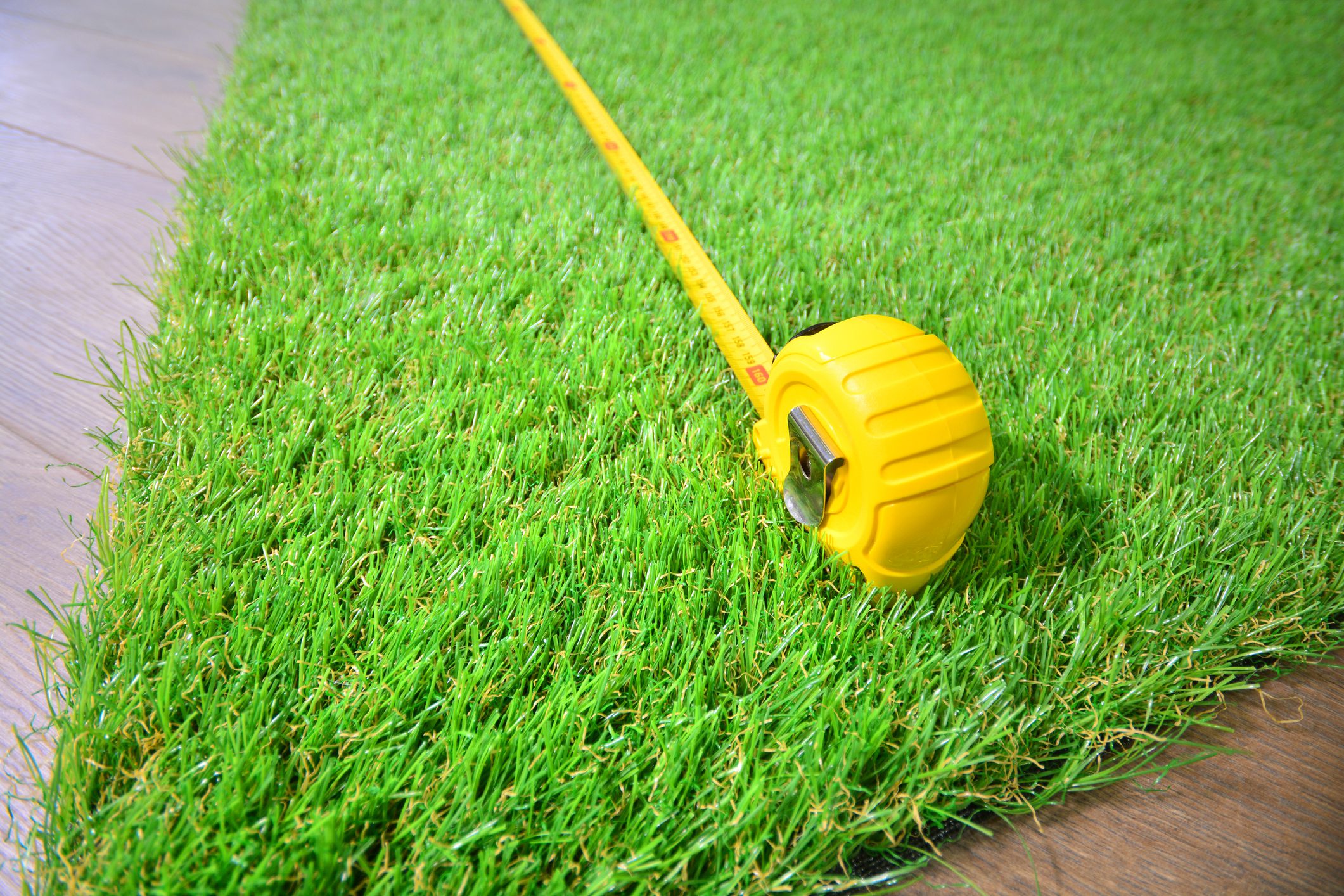
- Measure accurately: Calculate square footage by breaking irregular shapes into rectangles or triangles. For base materials, you’ll need roughly 0.1 cubic yards of gravel per square foot at 4-inch depth. Always order 5–15% extra for seams and cuts.
- Select the right artificial turf: Pile height (0.75–2.25 inches), density (70–100 stitches per inch), and colour tone vary by use. Kids’ areas suit 1.5-inch pile with antimicrobial backing; pet zones need 40+ inches per hour drainage, putting greens require low-pile nylon.
- Account for climate: GTA freeze-thaw can heave clay soils 4–6 inches annually. Ensure 1–2% slope (1/8 inch per foot) directing water away from foundations toward storm drains.
- Check existing slopes: Use a 4-foot level on a straight board or stretch a string line across the area. Water must flow away from your house and hardscapes.
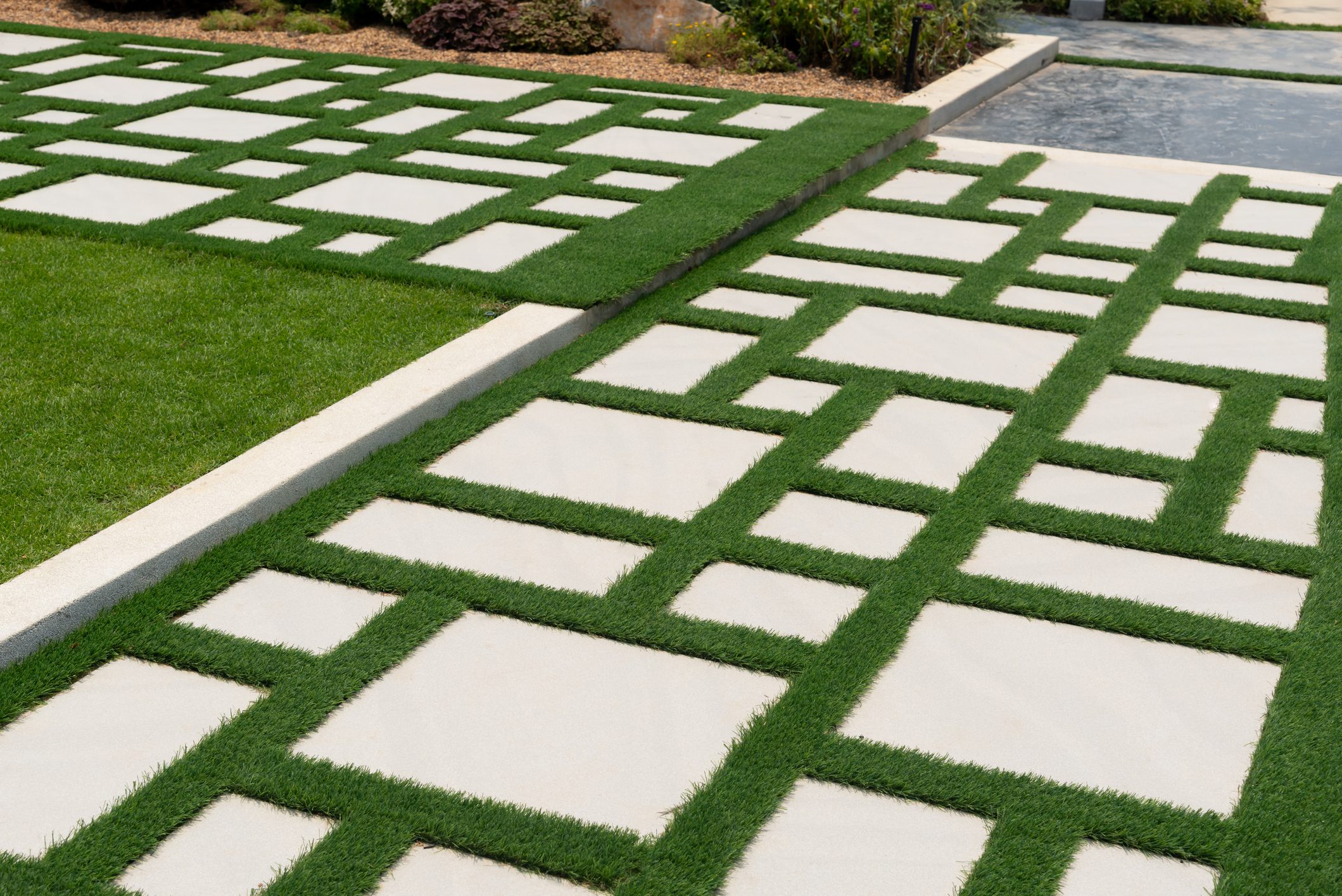
- Plan hardscape transitions: When integrating with interlock walkways or concrete patios, match heights within 1/4 inch to avoid trip hazards.
- Sketch your layout: Diagram artificial turf zones, pathways (3-foot widths for wheelbarrows), planting beds with 12-inch buffers, and pool placements. This becomes your blueprint for ordering materials.
Tools and Materials You’ll Need For Turf Installation
This shopping checklist covers everything for a proper install. Renting heavier equipment like plate compactors ($75–150/day) accelerates base preparation significantly.
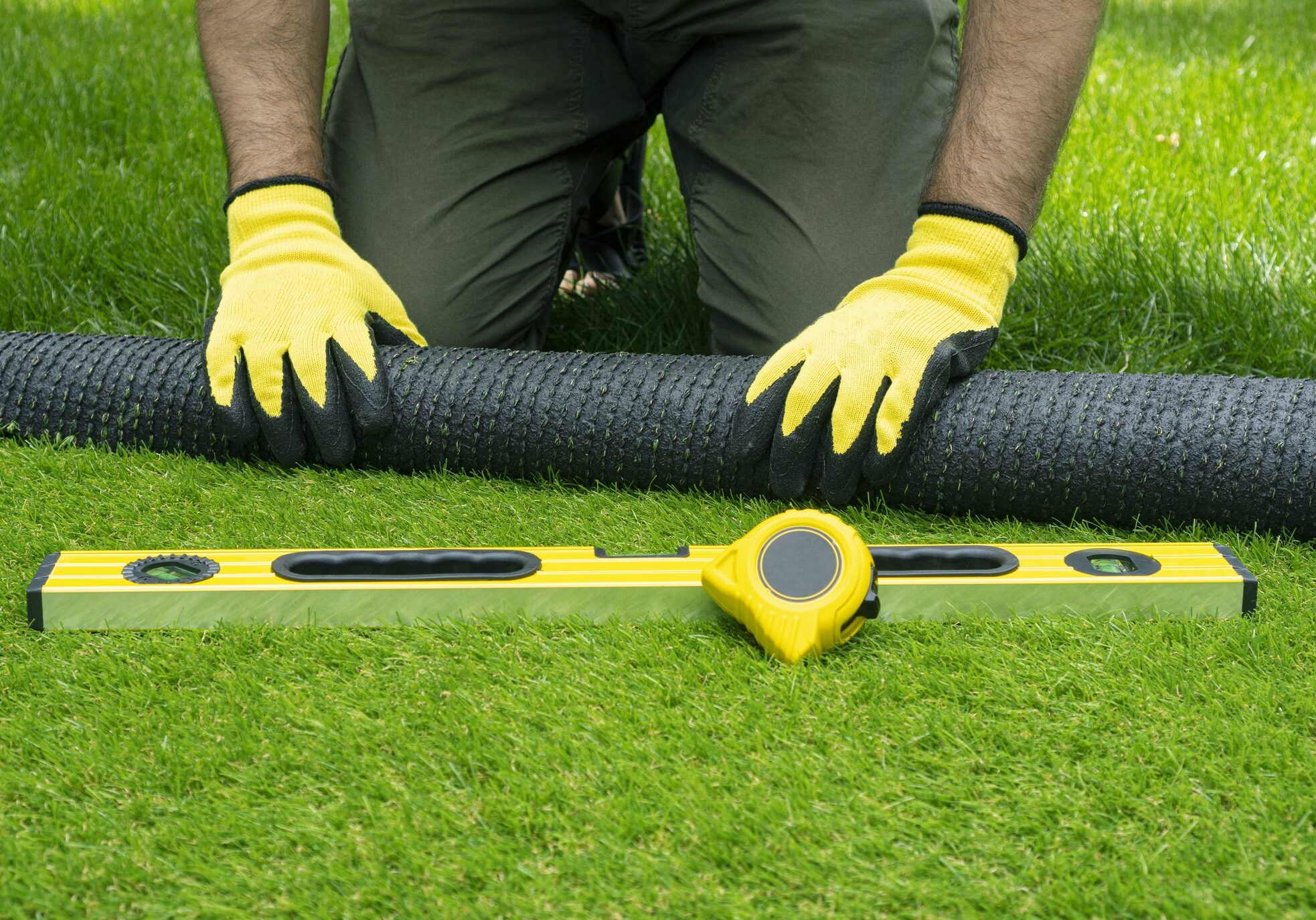
- Common tools: Shovel, spade, wheelbarrow, rake, landscape rake, hand tamper or plate compactor, utility knife with extra carbide blades, 100-foot measuring tape, string line, hammer or pneumatic nail gun, push broom or power broom.
- Base materials for Southern Ontario: 3–4 inches of crushed stone (3/4-inch clear crush or HPB) compacted in 2-inch lifts, topped with 1 inch of concrete sand or screenings.
- Weed barrier: Heavy-duty permeable geotextile fabric (4–6 oz per sq yard) allows drainage while blocking 95% of weeds. Overlap seams 6–12 inches and staple every 2 feet.
- Fake Grass/ Turf accessories: Galvanized spiral spikes (4–6 inches), 6-inch wide seam tape with polyurethane adhesive, and edging options including pressure-treated lumber, aluminum strips, or concrete borders.
- Infill options: Silica sand (0.5–2mm grains) at 1–3 lbs per square foot provides weight and cooling. Pet-specific zeolite absorbs urine at 1.25 times its weight. Spread evenly using a drop spreader.
- Optional extras: Foam underlay (10–15mm) provides 40–60% impact absorption for play areas. Drainage mats work well for balconies handling 50 psi loads.
Step‑by‑Step: How to Install Fake Grass/ Synthetic Turf on Soil
This section walks through a typical backyard installation on dirt or existing grass, addressing Mississauga’s dense clay soils that require deeper excavation.
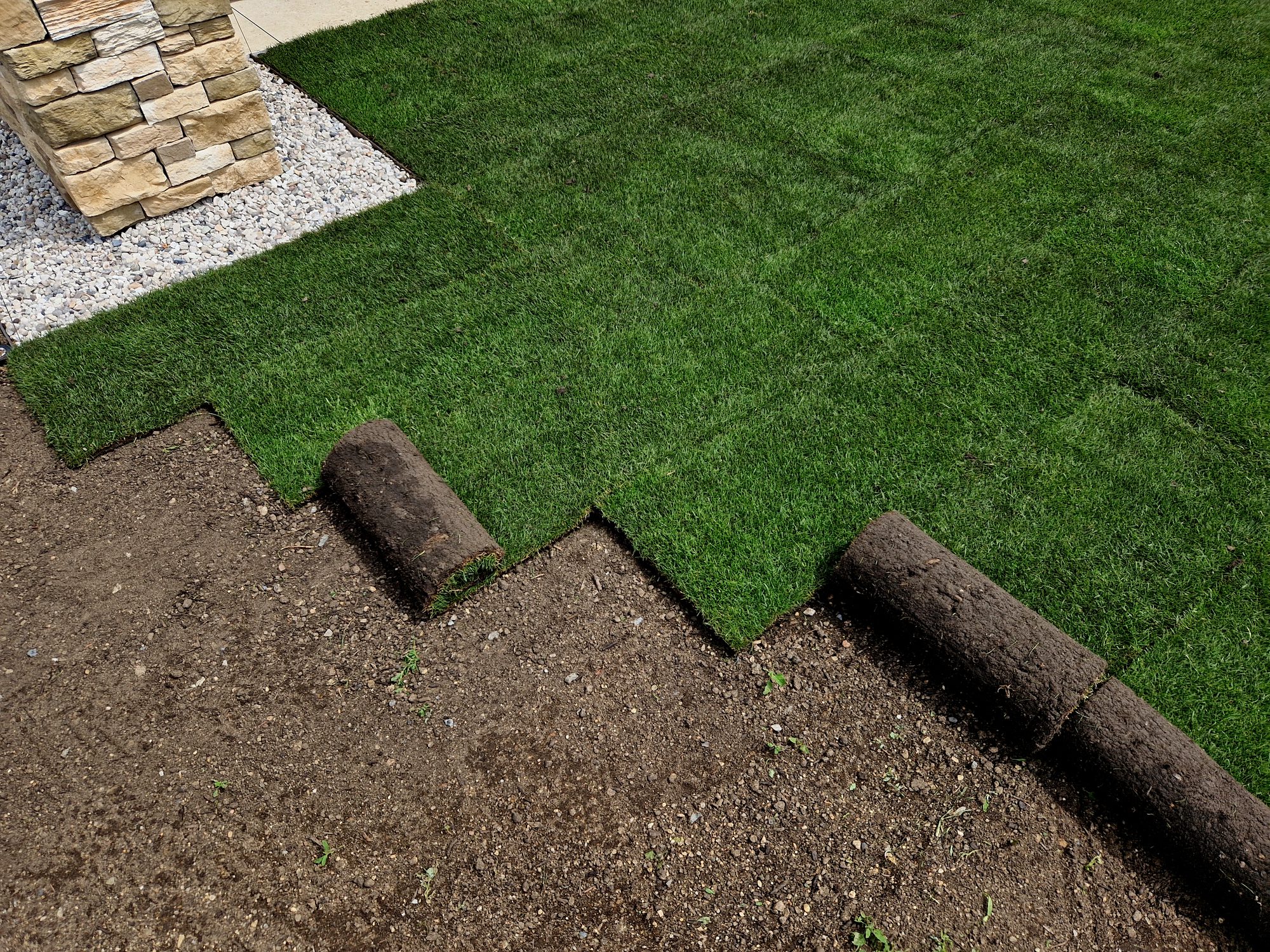
- Step 1 – Clear the area: Remove all existing grass, roots, and debris. Digging down 4–6 inches eliminates material that could destabilize your base. Match the fake grass/ synthetic grass height flush with adjacent patios.
- Step 2 – Rough grading: Shape the subgrade to drain away from your house. Use laser levels or string lines to achieve a gentle 1–2% slope throughout the ground.
- Step 3 – Install gravel base: Spread 3–4 inches of crushed stone in thin lifts. Compact each lift with a plate compactor until firm, filling low spots as needed. The surface should show no movement underfoot.
- Step 4 – Add leveling layer: Apply 1 inch of sand or screenings over the base. Screed smooth using 8-foot pipes or boards, verify with a straightedge (no more than 1/4-inch deviation), and lightly compact.
- Step 5 – Lay weed barrier: Roll out permeable fabric over the entire prepared surface. Overlap seams by 6 inches and secure with landscape staples every 3 feet.
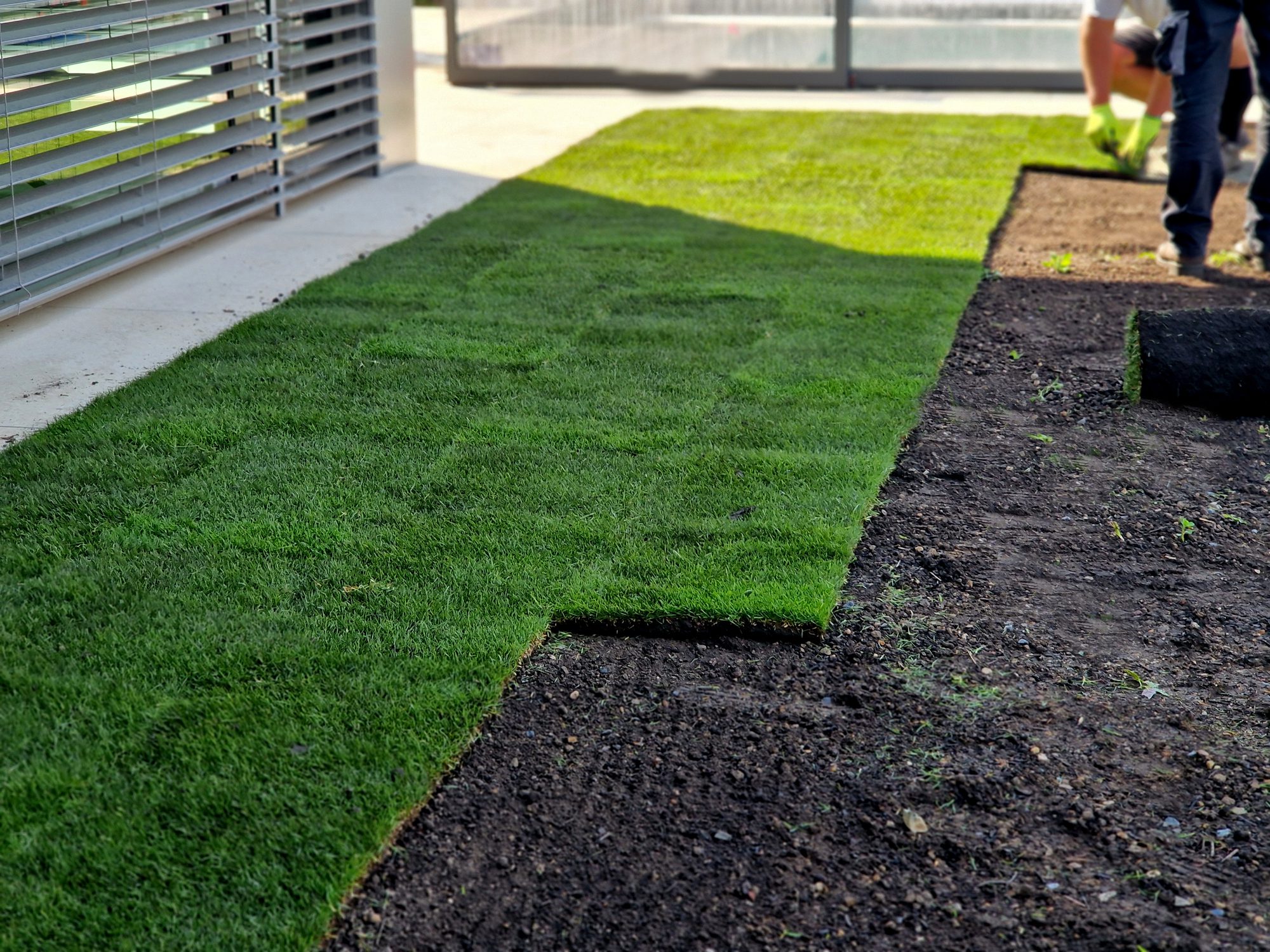
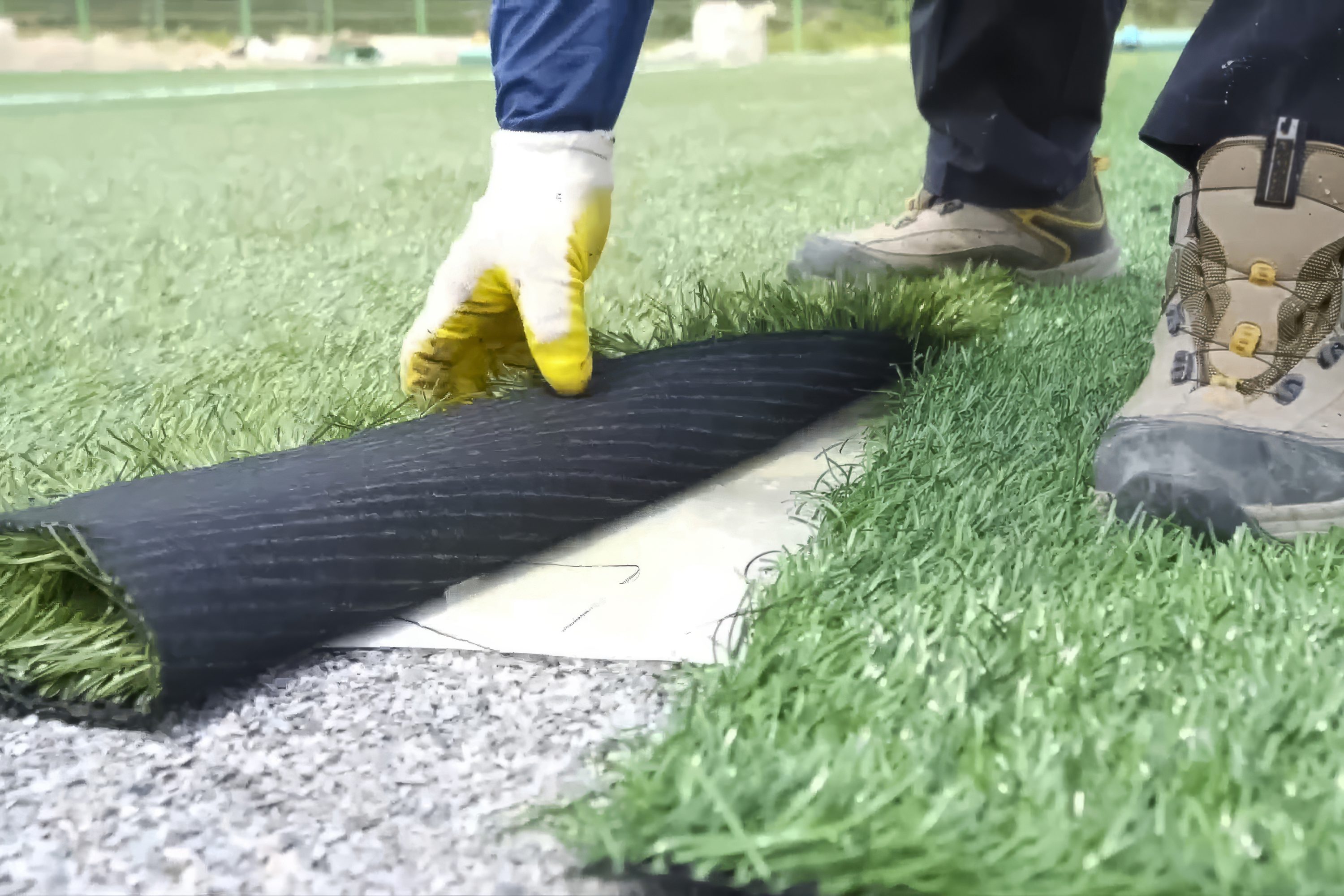
- Step 6 – Roll out synthetic grass: Position rolls so the grain faces the same direction across all pieces. If using more than one roll, let the material relax in sun for 1–2 hours to reduce wrinkles before you lay it down.
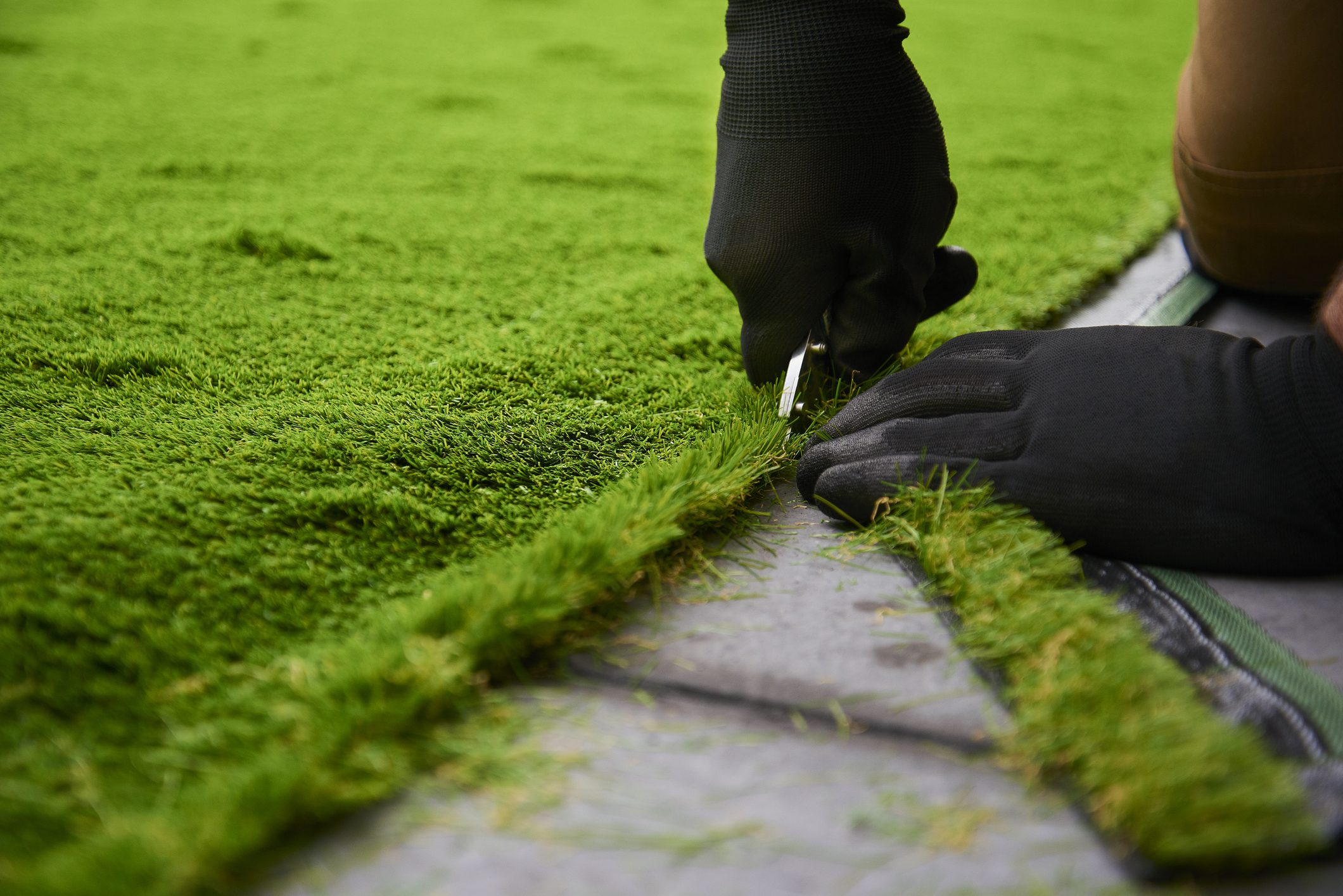
- Step 7 – Cut to fit: Trim synthetic grass along borders and obstacles using a sharp utility knife. Work from the backing side, leaving 1/2-inch buffers initially for adjustments around trees or posts.
- Step 8 – Join seams: Bring edges together with synthetic grass blades standing upright. Install seam tape underneath, apply adhesive in zigzags, and press firmly. Some installers use seaming cloth for additional reinforcement.
- Step 9 – Secure the perimeter: Drive galvanized nails every 6–12 inches around edges of synthetic grass, parting blades before hammering so fasteners remain hidden. Add field nails every 18–24 inches in high-wind zones.
- Step 10 – Add infill: Spread material evenly, then brush it into the turf using a stiff push broom or power broom. Work in multiple directions until fibers stand at 90 degrees.
- Final check: Walk the entire surface to feel for soft spots. Trim stray edges of synthetic grass and confirm the synthetic grass sits flush against interlock, concrete, or deck borders without gaps.
Borders, Edging, and Integrating Synthetic Grass with Hardscapes
Solid edges prevent shifting especially critical through Mississauga’s freeze-thaw seasons when unedged fake grass can move 1–2 inches annually.
- Brick or concrete curbs: Frame turf edges along flower beds or walkways with mortared or dry-stacked borders. These complement interlock patios and driveways beautifully.
- Lumber or composite edging: Pressure-treated wood (ACQ-rated for ground contact) composite works for straight runs alongside fences. Trench 6 inches deep and stake every 4 feet with rebar.
- Transition to hard surfaces: Set fake grass height 1/8–1/4 inch below paver height. This prevents trip edges and water pooling along the edge.
- Pool deck integrations: Choose non-slip turf varieties designed for splash zones. Slope 2% away from pool coping and ensure drainage paths clear water efficiently.
- Soften boundaries: Adding planting beds with ornamental grasses or shrubs along turf edges creates a more landscaped, natural appearance.
Special Artificial Grass Installations of Artificial Turf: Pets, Play Areas, High Traffic Areas and Putting Greens
Tailoring your synthetic grass to specific lifestyle needs requires certain precautions and product selections.
Pet Areas
Dogs and other pets need turf with perforated backing draining 60+ inches per hour. Use antimicrobial infill zeolite-based options absorb approximately one pint of liquid per cubic inch of material. Maintain easy hose access for regular rinsing, and slope the base 2% toward drainage paths. Avoid enclosed corners where odors concentrate, very low maintenance.
Kids’ Play Spaces
For areas near swings, slides, or playsets, with foot traffic add 1-inch shock pads under the turf. These rubber honeycomb mats attenuate falls from 8-foot heights to safe g-force levels per ASTM F1292 standards. Signature Landscape Construction can combine turf with rubber borders, play-grade mulch zones, or interlock paths for bikes and scooters.
Backyard Putting Greens
Greens require 3/8–1/2 inch nylon pile at tight gauge for true ball rolls. Build a smoother, more precisely leveled base screeded to 1/8-inch tolerance over 20 feet. Add separate fringe turf (3/4-inch pile) around cup locations for realism. Pros can design subtle breaks and drainage so greens remain playable after heavy rain even in unpredictable GTA weather.
Aftercare: Cleaning and Maintaining Your Artificial Lawn
Synthetic turf is low maintenance, but not zero-maintenance. Following basic maintenance instructions extends lifespan significantly.
- Routine brushing: Every month or two, brush high traffic areas using a stiff broom to maintain upright blades. Power brooms restore 95% loft in matted sections.
- Debris removal: Use a leaf blower, plastic rake, or soft broom to clear leaves and twigs. This is highly recommended in fall under mature trees.
- Pet cleanup: Pick up solids promptly, then hose the area. For persistent odors, mix one part vinegar with ten parts water and apply occasionally this neutralizes smells without damaging fibers.
- Stain removal: Apply mild household detergent mixed with warm water for food or drink spills. Scrub gently, rinse thoroughly, and avoid bleach or wire brushes that damage the mat.
- Winter care: Leave snow cover as insulation. Never use metal shovels or ice chippers these can snag fibers or lift seams. Let snow melt naturally as you would on grass.
- Spring inspection: Check seams, nails, and edges for lifting caused by winter heaving on turf. Address issues promptly to prevent dirt infiltration and maintain a clean surface.
DIY vs Professional Installation in the GTA
Comparing cost savings against time, tools, and physical labour helps homeowners decide the right approach.
- When DIY makes sense: Small, flat areas under 150–200 square feet are manageable if you’re comfortable renting a plate compactor and following technical steps. You can save money roughly 40–60% on labour costs.
- When to hire professionals: Large installations, complex slopes, pool surrounds, or designs integrating interlock, concrete, and custom decking benefit from expert preparation. Poor compaction causes 25% of DIY failures.
- Coordinated projects: Signature Landscape Construction handles full backyard transformations including excavation, base preparation, turf installation, interlock patios, driveways, and pool construction on a single coordinated schedule.
- Time comparison: A professional crew can complete a mid-sized Mississauga backyard (800–1,200 sq ft turf with new patio) in 2–3 days. The same project takes most DIYers several weekends.
For worry-free, long-lasting results, request a free on-site consultation. Design advice is included with every quote.
